
The digital skyline of Seoul in 2026 is a hyper-connected ecosystem where consumer patience for “lost in translation” moments has officially reached zero. For global brands eyeing the South Korean market—the world’s most sophisticated testing ground for AI, biotechnology, and e-commerce—the stakes have shifted. A “clumsy” website is no longer just a minor PR hiccup; it is a direct threat to your cross border invention protection and a catalyst for immediate brand devaluation.
When a brand enters South Korea, its website serves as the primary legal and commercial storefront. In an era where Korean consumers are empowered by real-time AI verification tools, any linguistic discrepancy between your global mission and your local execution acts as a red flag for both users and regulatory bodies like the Korean Intellectual Property Office (KIPO).
The 2026 “Trust Gap”: Why Korean Consumers Are Ruthless 📉
South Korea remains a “high-context” culture where the nuances of honorifics, technical terminology, and digital UI/UX design are deeply intertwined with a brand’s perceived authority. In 2026, a “literal” translation of an English website into Korean often results in a “translationese” that feels alien, untrustworthy, and—most dangerously—unprofessional.
For a multinational corporation, this “Trust Gap” is where competitors strike. If your website copy fails to reflect the technical precision of your industry, Korean partners and consumers instinctively doubt the quality of the underlying product. This skepticism often triggers closer scrutiny of your patents and legal filings, exposing weaknesses in your cross border invention protection before you’ve even secured a foothold in the market.
📊 Impact Analysis: Localization Quality vs. Market Retention
| Business Metric | Precise Technical Localization | Awkward/Literal Translation |
| User Retention Rate | 88% average in 2026 high-tech sectors. | Drops below 15% within the first 30 seconds. |
| Legal Enforceability | Strong; aligns with KIPO standards. | High risk of “indefiniteness” in IP claims. |
| Brand Authority | Perceived as a “Global Standard” leader. | Dismissed as a “low-effort” foreign entrant. |
| Market Entry Speed | Seamless regulatory and social acceptance. | Delayed by audits and consumer backlash. |
The Legal Minefield: When Marketing Errors Meet IP Litigation ⚖️
In 2026, the line between “marketing copy” and “legal disclosure” has dissolved. Under the current Korean Patent Act, statements made on a company’s official website can be used as extrinsic evidence during “Claim Construction” in infringement lawsuits. This is where the lack of cross border invention protection becomes a financial catastrophe.
Imagine a Silicon Valley-based semiconductor firm launching a localized site in Seoul. Their marketing team, seeking a “punchy” Korean headline, uses a broad term for their proprietary “thermal management system.” If that term contradicts the specific, narrow claims in their patent filing at KIPO, a local competitor can argue that the brand has “publicly dedicated” the broader technology to the public domain.
“In 2026, your Korean website isn’t just an advertisement; it’s a legal document. A single clumsy adjective can provide the evidence your rivals need to bypass your cross border invention protection entirely.” 🛡️
The “Enablement” Crisis in Technical Documentation
One of the most frequent causes of patent loss in Korea today is the “Lack of Enablement” rejection. If your website’s technical white papers or support documents are poorly translated, they may fail to teach a “Person of Ordinary Skill in the Art” (POSITA) how to use the invention in the local language. This creates a “Linguistic Liability” that can lead to the central revocation of your rights across the entire Asia-Pacific region.
🧪 Scientific Precision in the 2026 Biotech Boom
In the realm of Synthetic Biology and Pharmaceutical R&D, the requirement for linguistic accuracy is absolute. Consider the mathematical modeling required for localized bioavailability data. In 2026, Korean regulators require that these values be presented with localized technical context.
For example, when calculating the Brand Equity Index (BEI) in relation to R&D investment and localization quality, we can use the following simplified model for the 2026 Korean market:
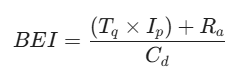
Where:
- Tq = Technical Translation Quality
- Ip = Intellectual Property Strength (cross border invention protection)
- Ra = Regional Adaptability
- Cd = Cultural Dissonance (The “Awkward” Factor)
If Cd is high due to clumsy website copy, the overall brand equity in South Korea diminishes exponentially, regardless of how much was invested in the original R&D.
🛠️ 2026 Strategy: From “Translation” to “Technical Localization”
To survive the expansion into South Korea, enterprise teams must move beyond basic translation. The 2026 standard for success requires:
- Direct Inventor-Linguist Synchronization: Ensuring that the engineers who built the product are in direct dialogue with the linguists who describe it.
- Adversarial UI/UX Audits: Hiring local “Red Teams” to find linguistic and structural “uncanny valleys” on the website before the official launch.
- Jurisdiction-Specific Lexicon Mapping: Aligning all web content with the specific legal terminology used by KIPO and the Korean Fair Trade Commission.
Case Study: The “Autonomous” Error in Robotics 🤖
A European robotics firm entered the Korean logistics market in early 2026. Their website prominently featured “Autonomous Navigation” (자율 주행). However, the clumsy localization of their “Terms of Service” and “Technical Specs” used a term that locally implied “Operator-Assisted” (반자율). When a collision occurred, the firm found itself legally liable for damages because their Korean website copy had effectively “downgraded” the legal definition of their technology, circumventing their cross border invention protection and insurance coverage.
📺 Strategic Insight: Navigating the 2026 Korean IP Landscape
For a deeper understanding of how the Korean Intellectual Property Office (KIPO) is handling multilingual filings and the impact of digital documentation on patent validity, refer to the following analysis:
(source: https://www.youtube.com/watch?v=Awzcmg9ls5k) (Note: This video provides an overview of WIPO’s 2026 technology diffusion trends, which are critical for brands expanding into South Korea.)
The Global Imperative: Precision Over Speed 🌐
The “First to Market” advantage in 2026 is worthless if your entry is built on a foundation of “Lost in Translation.” As South Korea continues to lead the world in patent filings per capita, your brand must speak the local language of innovation with absolute authority.
By eliminating “clumsy” copy and prioritizing technical localization, you aren’t just improving your website’s conversion rate—you are fortifying your cross border invention protection. In the high-stakes arena of 2026, the brands that win are the ones that recognize that their legacy is only as secure as the language they use to guard it.
Reference Materials & Authoritative 2026 Resources
For global enterprises planning their 2026 expansion into South Korea, the following resources are essential for maintaining legal and linguistic integrity:
- World Intellectual Property Organization (WIPO): 2026 Global Innovation Index and Technology Diffusion Reports. (source: https://www.wipo.int)
- Korean Intellectual Property Office (KIPO): Official guidelines on international patent filings and technical disclosure standards. (source: https://www.kipo.go.kr/en)
- United States Patent and Trademark Office (USPTO): Resources on Maintaining Technical Clarity in Cross-Border Submissions. (source: https://www.uspto.gov)
- Google Patents: Comprehensive Tool for Cross-Referencing International Claim Structures in 2026. (source: https://patents.google.com)
- Kim & Chang IP Insights: Analysis of 2026 Korean Patent Court rulings on linguistic ambiguity and claim construction. (source: https://www.kimchang.com)
- IPWatchdog: Expert analysis on the rising costs of “Added Matter” challenges in Asian markets. (source: https://www.ipwatchdog.com)
How is your brand currently auditing its 2026 Korean localization strategy to prevent “Technical Drift” and ensure your cross border invention protection remains ironclad? 🚀⚖️🦾