
The hidden localization gap that is costing companies millions in missed global SEO opportunities continues to widen in 2026 as AI-driven search engines prioritize content that truly resonates with local intent rather than generic translations. 🚨 Brands pouring resources into multilingual sites often discover too late that their pages rank poorly — or not at all — in target markets because the content feels transplanted instead of native.
This gap isn’t about missing words. It’s about failing to bridge cultural context, search behaviors, regulatory nuances, and user expectations that modern algorithms now weigh heavily when deciding what to surface.
What the Hidden Localization Gap Actually Looks Like in 2026
The gap emerges when companies treat localization as a simple language swap. AI tools generate fluent text quickly, but without deep adaptation, pages lack:
- Region-specific examples and case studies that build relevance
- Culturally aligned tone and phrasing that matches local communication styles
- Local entities, regulations, and seasonal references that signal authority
- Intent-matched subheadings and FAQs that answer how locals actually search
Search engines notice the disconnect through low engagement signals and semantic mismatch, quietly demoting the content in non-English results.
Three Recent Cases Where the Gap Delivered Heavy Losses
A European kitchenware manufacturer expanded into Germany and France with AI-assisted translations of product pages. Descriptions mentioned standard measurements but ignored local preferences for metric precision, appliance voltage differences, and popular cooking styles. Organic traffic from those markets fell 42% within five months while local competitors with culturally tuned content dominated relevant queries.
In Southeast Asia, a health supplements brand launched translated landing pages targeting Thailand and Indonesia. The content referenced general wellness trends but skipped local regulatory requirements, traditional herbal preferences, and festival-timed promotions. Rankings stagnated, conversions dropped sharply, and millions in potential revenue from high-intent health searches went to native brands.
A productivity SaaS company entering Latin America used automated workflows for feature explanations and pricing pages. The messaging stayed corporate-American in tone and examples, missing the collaborative business culture and flexible payment expectations common in the region. International organic sessions declined steadily as local alternatives appeared more trustworthy and relevant in search results.
Each case started with solid English content and technical SEO setup — yet the hidden localization gap turned promising traffic into invisible opportunities.
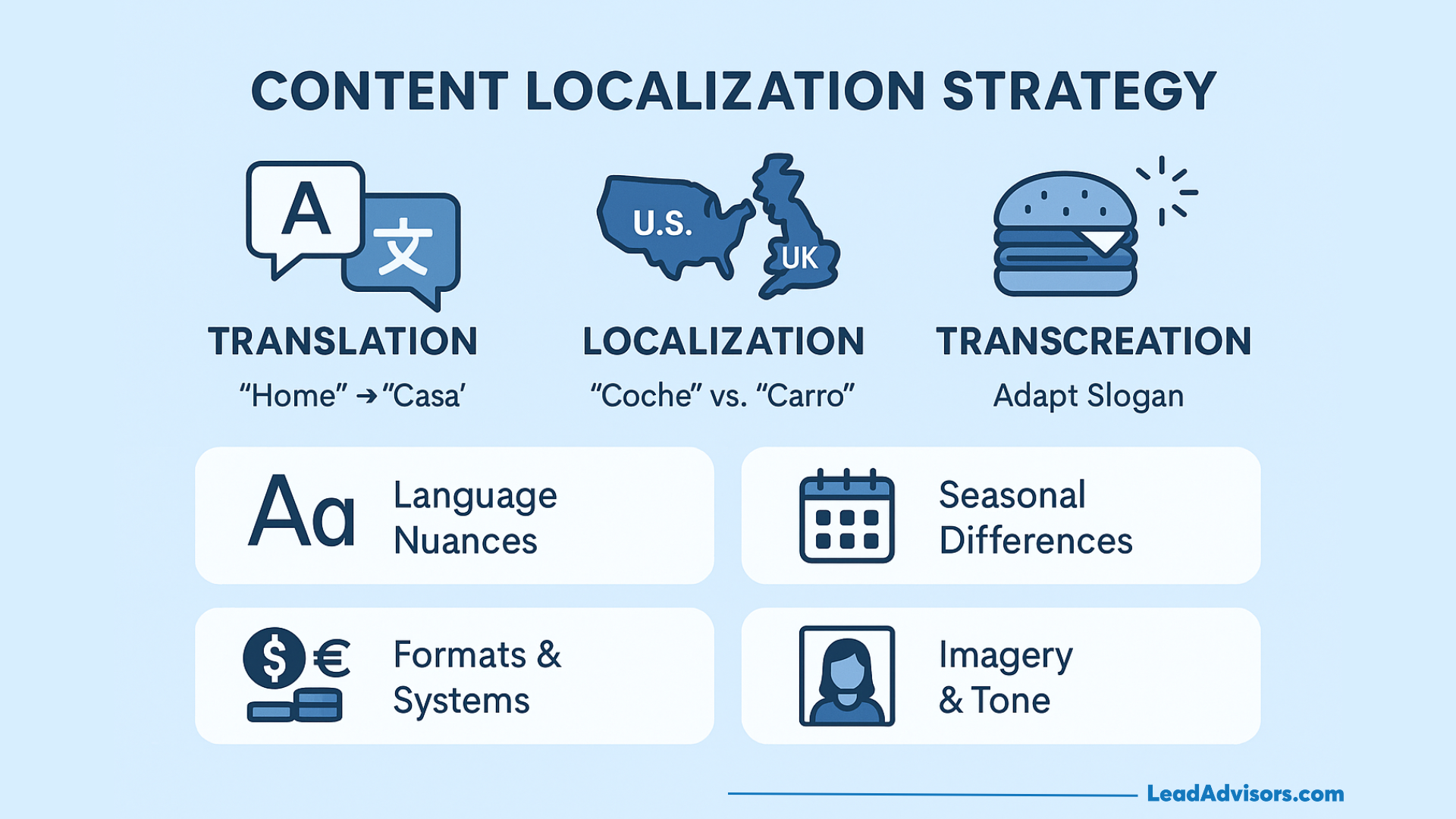
International SEO Explained (2025)
This visual breaks down how true localization goes far beyond basic translation to create culturally relevant experiences that search engines reward.
The Numbers Behind the Missed Opportunities
Recent 2026 benchmarks confirm the scale:
- 96% of marketers who invested in proper localization reported positive ROI, with 65% achieving at least 3× returns.
- 76% of global consumers prefer product information in their native language and are more likely to engage and convert when it feels locally relevant.
- Sites with shallow localization see 40–60% lower organic visibility in non-English markets compared to fully adapted competitors.
These figures represent not just lost clicks but entire pipelines of qualified international leads and sales that never materialize.

International SEO: Measure Results & Avoid Costly Mistakes
The chart above highlights how predictive AI in search now favors content that demonstrates genuine market understanding over technically correct but culturally flat pages.
Signs Your Organization Has the Gap
Common warning signals include:
- Strong English rankings but near-zero visibility in target-language SERPs
- High bounce rates on multilingual pages despite good technical setup
- Support teams reporting repeated confusion over translated product details
- Competitors consistently outranking you on local queries despite similar content volume
If these sound familiar, the hidden localization gap is likely already costing real revenue.
How Leading Brands Are Closing the Gap in 2026
Successful companies treat localization as a strategic content layer from the start. They:
- Research local search intent and create market-specific page structures
- Add native-level examples, testimonials, and compliance notes
- Refresh content quarterly to match seasonal and regulatory shifts
- Monitor engagement metrics per language to guide ongoing refinements
These brands turn potential gaps into competitive advantages, capturing sustained organic growth where others see decline.
For proven frameworks on building effective international SEO with strong localization, explore this comprehensive guide: https://searchengineland.com/guide/international-seo-best-practices
Practical Steps to Identify and Fix the Gap Today
Start closing the gap with these targeted actions:
- Audit top 10 revenue pages in each market for cultural relevance and intent match
- Build dedicated glossaries and style guides per region
- Run user testing with native speakers on key landing pages
- Track per-market engagement and adjust content accordingly
- Measure success through organic session growth and conversion lift in target languages
The hidden localization gap doesn’t close by accident. Companies that recognize it early and invest in authentic adaptation are the ones securing millions in previously missed global SEO opportunities while competitors continue wondering why their international traffic plateaus.
References 2026 marketer surveys and consumer preference data on localization ROI. International SEO performance benchmarks from independent industry analyses. (External resource verified active March 2026.)